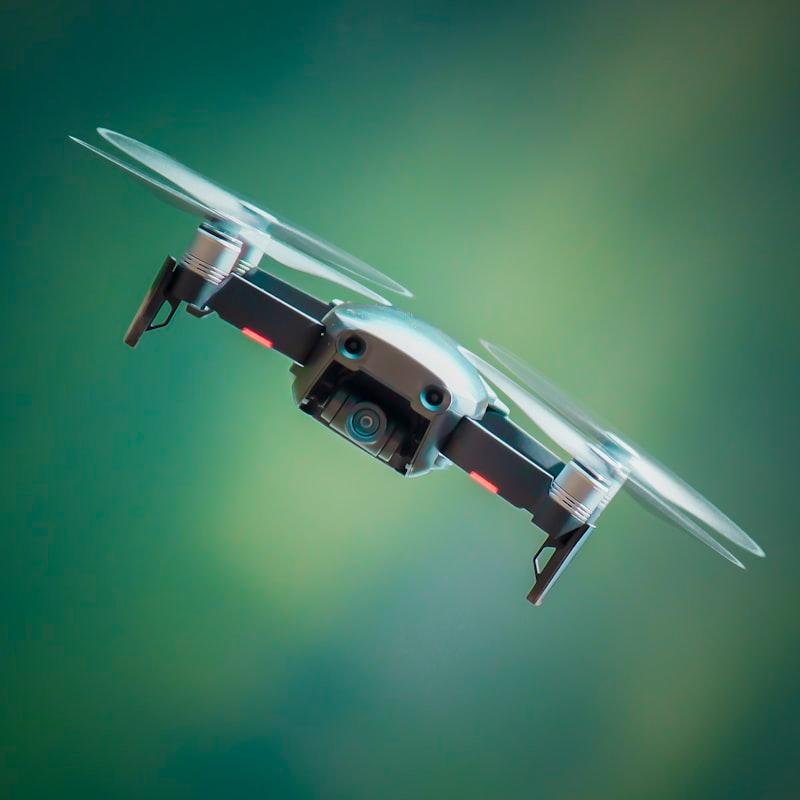
NDVI — the Normalised Difference Vegetation Index — has been used in satellite remote sensing since the 1970s. What has changed in the last three years is the democratisation of the technology: multispectral sensors that once cost $50,000 now ship as purpose-built drones for under $8,000, and the processing software has become fast enough to deliver field-level insights within hours of a flight.
The core principle is elegantly simple. Healthy plants absorb red light and reflect near-infrared (NIR) light strongly. Stressed or dying vegetation does the opposite. By comparing the ratio of reflected red to NIR using a multispectral camera, agronomists can produce a colour-coded map showing exactly where a field's health is declining — before the damage becomes visible to the naked eye.
In our Bugesera District project, the NDVI survey identified a 340-hectare zone of severe water stress that the cooperative's field officers had not noticed. The cause turned out to be a blocked irrigation canal head that had been partially obstructed for several weeks. Once cleared, the stress zone recovered within two weeks — a recovery that would have gone unnoticed until harvest loss.
For smallholder cooperatives, the challenge is aggregating enough land under a single flight operation to justify the mobilisation cost. AEROVYN's cooperative pricing model groups neighbouring farms into a single survey day, reducing per-hectare costs by up to 60% compared to individual farm surveys.
The data pipeline matters as much as the drone. Raw multispectral images are only useful when they become actionable prescription maps. Our team delivers georeferenced PDF reports and KMZ layers that farmers can open on a basic Android phone with Google Earth — no GIS training required.